Case study · 2025—now
aListEngine
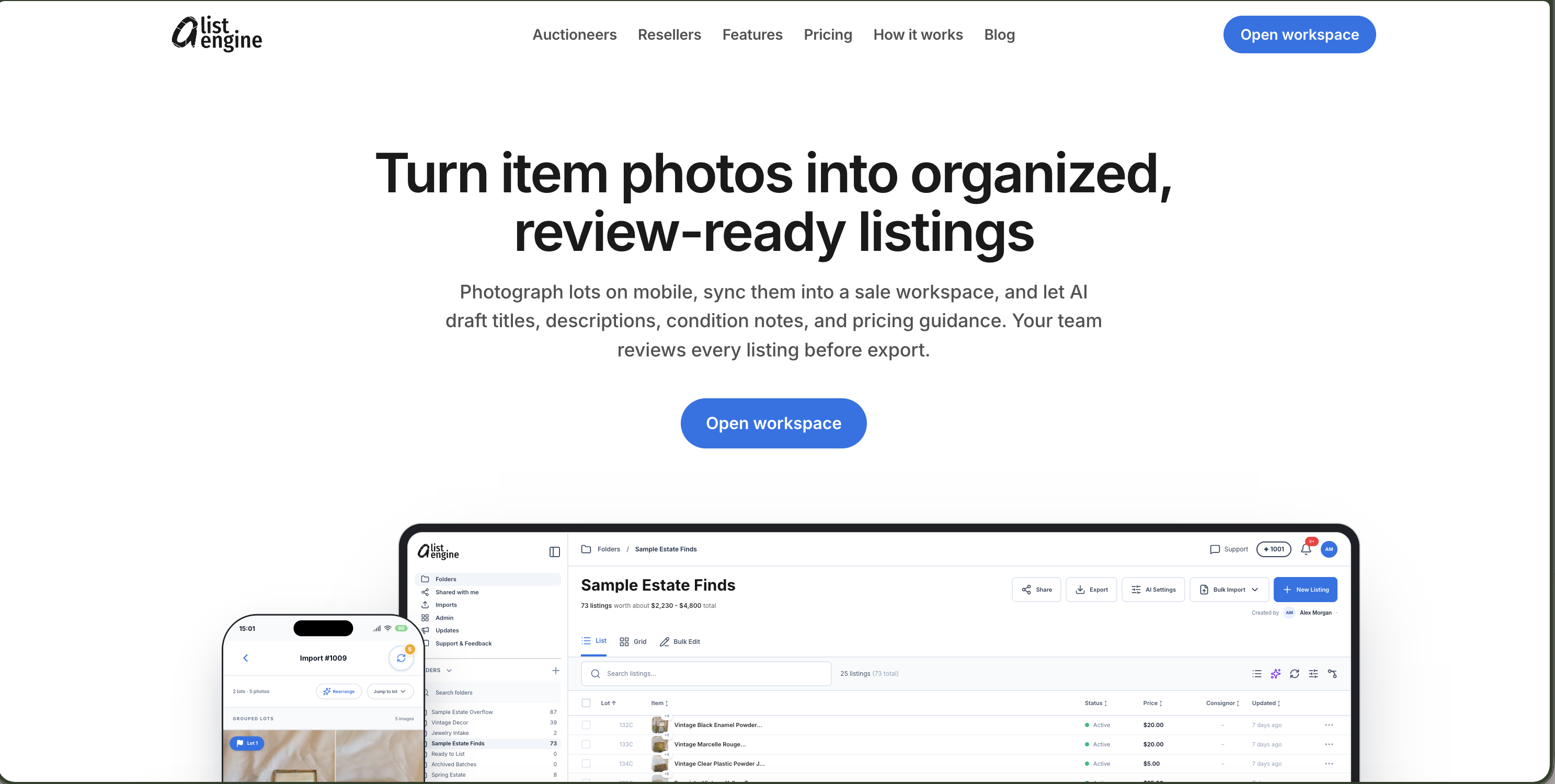
Designing an offline-first workflow that helps auction teams turn field photos into reviewable, export-ready listings.
The brief
aListEngine is an in-house product for auction houses and resellers. Its users often photograph inventory in estates, warehouses, and other locations with unreliable internet, then need to organize, describe, and export a large volume of listings to the platforms where they sell.
The starting experience relied on generic AI descriptions, limited export options, and too much friction between capture and a usable listing. We worked closely with a teammate who brings 15 years of auction-domain experience to make the workflow feel natural for the people doing the work.
My role
I work in a two-developer team. Our senior engineer leads architectural decisions, while I contribute to decisions across the product and technical direction. I lead feature definition and interaction flows, and contribute substantially to implementation across the platform. We work collaboratively on the direction we take.
- Mobile: I fully own the iOS and Android app, including offline capture, local data, sync behaviour, and recovery flows.
- Product platform: I shape and implement bulk-import flows, listing analysis, prompt-template work, and the web experience across React and Rails.
- AI and cost: I integrate fit-for-purpose, lower-cost language models into customer workflows while keeping human review in the loop.
- Marketing: I own the marketing site and its product education, search visibility, and acquisition work.
The workflow
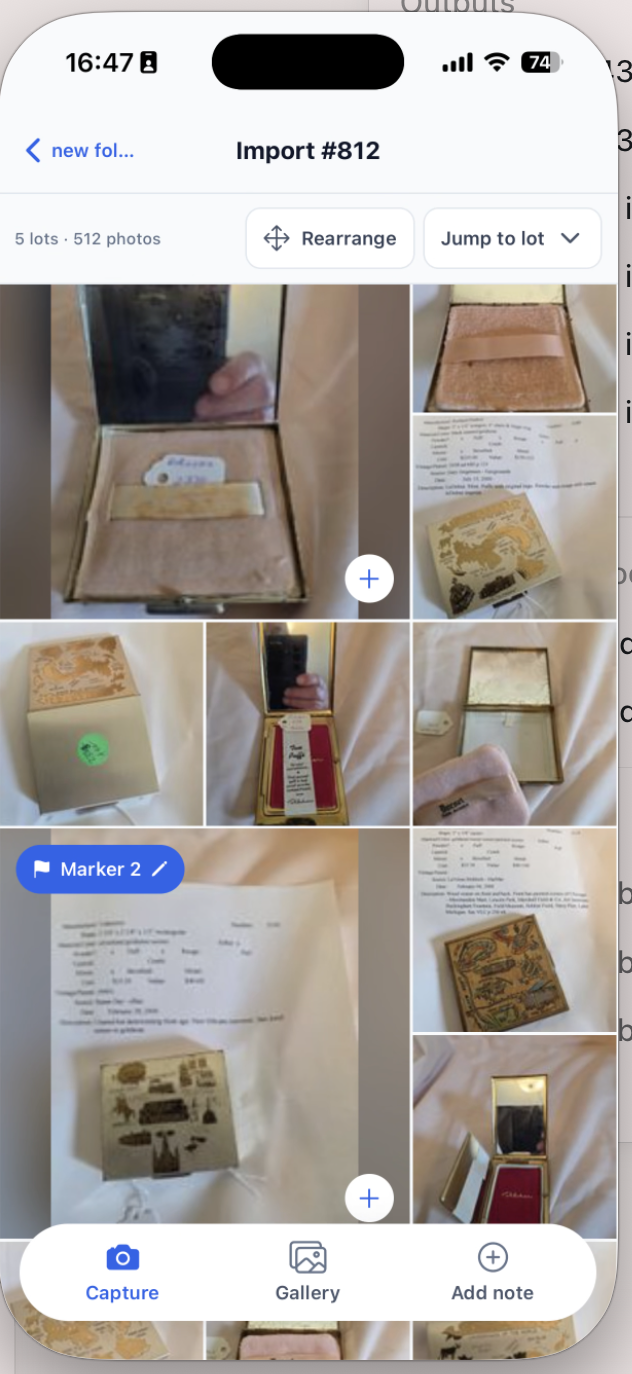
- Capture anywhere.Teams create folders and capture or import photos on a phone, even with no connection.
- Persist locally first.The mobile app stores metadata in SQLite and images on-device, then records durable sync work.
- Sync and recover.When a connection returns, queued work uploads in dependency order with retries, reconciliation, and clear status.
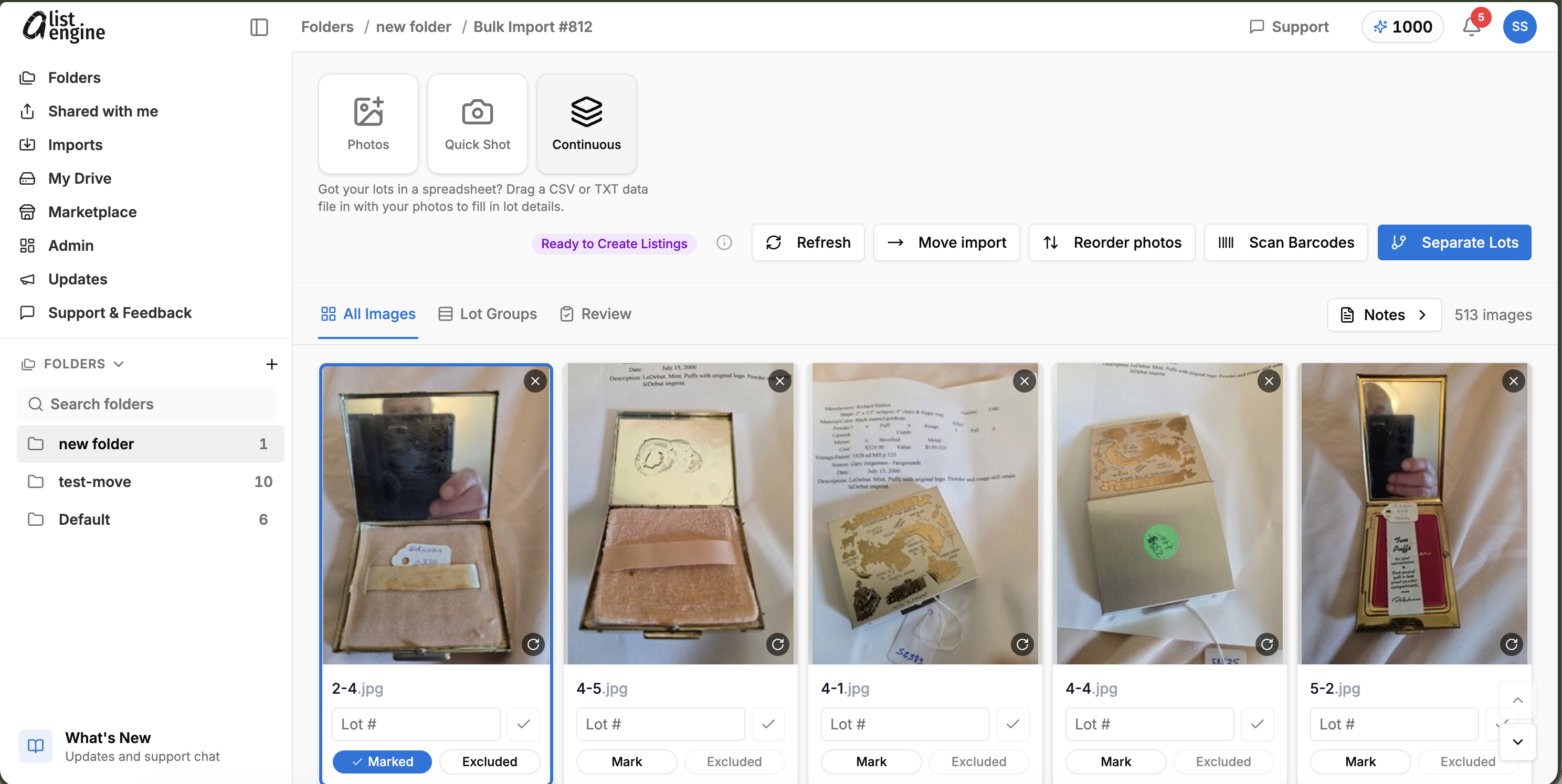
- Review in bulk.On the web, teams group images into lots, use barcode information where helpful, and refine listing drafts.
- Export for the destination.Listings can be prepared for auction and commerce platforms such as AuctionFlex, K-Bid, Shopify, and others.
Evidence at working scale
images attached and processed in 19 seconds after they reached the backend, across a 12-batch mobile import.
This is a backend ingest measurement, not a claim about field capture or a phone’s upload speed. A separate recent mobile import contained 590 images and processed every one successfully.
Engineering choices
Local-first, not offline as an afterthought
Every field action writes locally before the network is involved. This makes the field workflow usable in the places where inventory actually lives.
Reliable sync has a visible state
Images, folders, and bulk-import work use a persistent queue with retries and recovery paths, so people can see what still needs attention.
AI supports judgment
AI produces structured starting points, while the product keeps review and correction in human hands before an export is created.
Image delivery tuned for large photo sets
I integrated imgproxy as a separate delivery service, serving signed S3-backed thumbnail, card, and export variants on demand. URL-based transforms handle rotation immediately, while modern format detection and cache-friendly delivery keep the image pipeline efficient.
Where it is now
The product is live, used by customers on iPhone and Android, and actively onboarding more auction-house teams. The offline mobile workflow is a core part of the product’s value: it lets teams keep capturing inventory first and sync everything once they are back online.
I cannot share customer names or private operating metrics, but the direction is validated by customer feedback: simplicity and dependable offline capture are recurring reasons the workflow resonates.